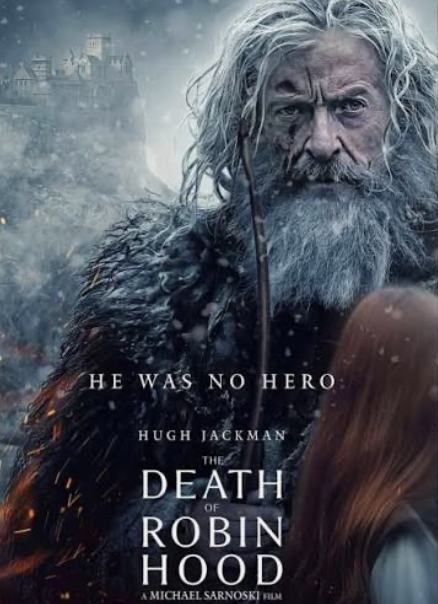
When a movie has outstanding cinematography and a major star giving a powerful performance, you can almost forgive anything else that might be missing. In The Death of Robin Hood, the breathtaking cinematography and Hugh Jackman’s exceptional lead performance are superb, unfortunately, the revisionist approach is a difficult one to digest. It is not the Robin Hood most audiences will expect, especially if you have not read the reviews (although the title itself is a giveaway, as its marketing byline “He was no hero” – also gives it away)
In this one, he sure was no hero.
The biggest problem I found was the mood. The film creates such a dark, dreary atmosphere that it drains away any enthusiasm for seeing this tale when you sat down. This is not that swashbuckling adventure through Sherwood Forest. The story actually goes nowhere, and though the creative intention of shaking this story up is commendable and could have worked, like Robin, we now feel lost in the forest. Wandering, where do we go from here? Its pacing is slow, and there is only so much even the amazing Hugh Jackman can do to swashbuckle- his-way to saving us all. (Though did I say – his performance is a fantastic.)
The movie stars Hugh Jackman, Jodie Comer, Bill Skarsgård, Murray Bartlett, Noah Jupe, and Faith Delaney.
Today, Jackman remains one of Hollywood’s most talented performers and this one shows no exception. He is simply, a great actor. No matter what the role. (Reminds me of a Jack Lemmon who did drama, comedy and entertainment equally.)
Jackman plays an aging and deeply pained and Robin Hood. This is not the legendary Robin who stole from the rich to give to the poor. Instead, we meet a man suffering from regret, and pained by his past, as he realizes what he has done and has been. He has looked in the mirror and does not like what he sees. This Robin is now deeply depressed. He realizes he was never the hero history made him out to be. Instead, he sees himself as a violent man whose reputation was built on falsehoods. Interesting realization, yes, agreed. But it becomes exhausting over two hours. Robin wants to leave his violent past behind but he cannot. Little John draws him into one final battle and Robin gets injured. He is then cared for by Sister Brigid, played by Jodie Comer, whose quiet performance provides kind compassion, though even those scenes go nowhere. (Did I mention that Hugh Jackman did a great job? Trying to stay positive here.)
Writer and Director Gets Creative
Writer and director Michael Sarnoski (Pig and A Quiet Place: Day One) enjoys deconstructing heroes. Here, he removes every ounce of our poor Robin and burdens him with grief and guilt and…regret. Then, this is when it really hits us – Robin’s depression begins to wear off on us. Soon we are slumping in our seats. Drained. Sighing to ourselves as we search for one last crumb of popcorn Wanting to put him out of his misery and have him snap out of it.
The second half becomes even more of a test of patience. The film is deliberately slow and feels sad now. The down-trodden score doesn’t help. Creates more of this bleak mood that Sarnoski has purposefully created. You almost find yourself waiting for the death part of the title to arrive. Robin’s. Yours. Mine. Anyone’s. Just put everyone out of their misery (Maybe this is why he called it The Death of Robin Hood. Hmmm)
Another issue that added to the exhaustion for me was the dialogue. Many characters speak with heavy medieval accents for authenticity but they use language that is difficult to understand. Authenticity is admired and I love the idea of doing that but when we the audience struggle to make out verbiage, it tires us even more, and we obviously miss things that they said,
When you go in, you are likely expecting sword fights, archery, action, adventure, leaping, swashbuckling. Nope. This film offers the opposite. Violence, emotionally weighted scenes and missing any of the thrills that we had with past Robin Hood productions. (But then maybe that is why he called the movie The Death of Robin Hood. Hmmm)
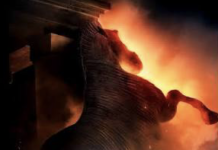
The production itself is beautifully crafted. The cinematography is striking. Arresting landscapes, well planned out lighting, authentic production design so it’s a big business movie, and all that is great, truly, but that alone cannot make up for the lack enthusiasm we have for the story.
The running time is two hours and three minutes. Three more minutes. I’d love to say it was only those extra three minutes that tested my patience, but the truth is it became harder and harder to enjoy after the first half.
Despite the great Hugh Jackman giving everything to us, my obvious curiosity-filled question to him would be simple: “What on earth attracted you to this version of Robin?” Maybe it was the challenge of dismantling a legendary character. Likely was it. Well, that, they did do well. (Maybe this is why he called the movie The Death of Robin Hood. I think I’m getting it now. Lightbulb.) That all said, for some, this might be exactly what they are looking for and will love the entire epic feel and switching it up.
But Robin Hood, I feel, should simply have been left alone and stayed Robin Hood. Leotards, feathers, and all.